Safeguard Your Business with
Risk Management
Identify, assess, and mitigate potential threats—ensuring financial stability, operational continuity, and sustainable growth.
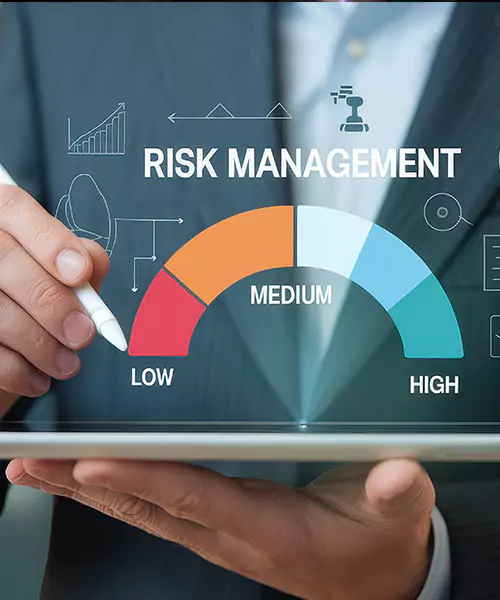
Protecting 500+ Enterprises
About
Why Risk Management Matters?
Risk management helps organizations anticipate uncertainties, minimize losses, and take informed decisions for long-term resilience.
- Identify and mitigate business threats
- Improve decision-making with insights
- Ensure regulatory compliance
- Safeguard reputation and assets
Categories
Types of Risk Management
Covering all key aspects to build a resilient risk framework.
Operational Risk
Risks from internal processes, systems, or human errors.
Financial Risk
Market volatility, credit defaults, and liquidity issues.
Compliance Risk
Regulatory, legal, and governance-related risks.
Strategic Risk
Long-term risks from poor planning or competition.
Process
Our Risk Management Journey
A structured approach to predict, prepare, and protect.
Identify Risks
Spot potential threats across operations, finance, and strategy.
Assess Impact
Evaluate severity, probability, and business implications.
Mitigation Planning
Design controls, safeguards, and backup strategies.
Monitor & Review
Track effectiveness and update risk plans regularly.
Direct vs Regular
Know the Key Differences
Direct Plans
-
०
Investor manages everything on their own – from fund selection to portfolio review. -
०
Lower expense ratio (no distributor commission). -
०
Requires time, research, and confidence to manage on your own. -
०
One-size-fits-all — no tailored advice or adjustments. -
०
High chance of emotional decisions, panic exits, or inconsistency. -
०
Around 40% of retail mutual fund assets are via direct plans.
Regular Plans
-
०
Full support from a qualified MFD – from selection to rebalancing. -
०
Slightly higher expense ratio (includes MFD commission). -
०
MFDs handle documentation, tracking, and even KYC. -
०
Investment is tailored based on goals and market conditions. -
०
MFDs help maintain discipline during market volatility. -
०
Nearly 60% of investors prefer Regular plans for expert guidance.
Numbers
Our Risk Management Impact
Metrics that highlight our dedication to proactive risk control.